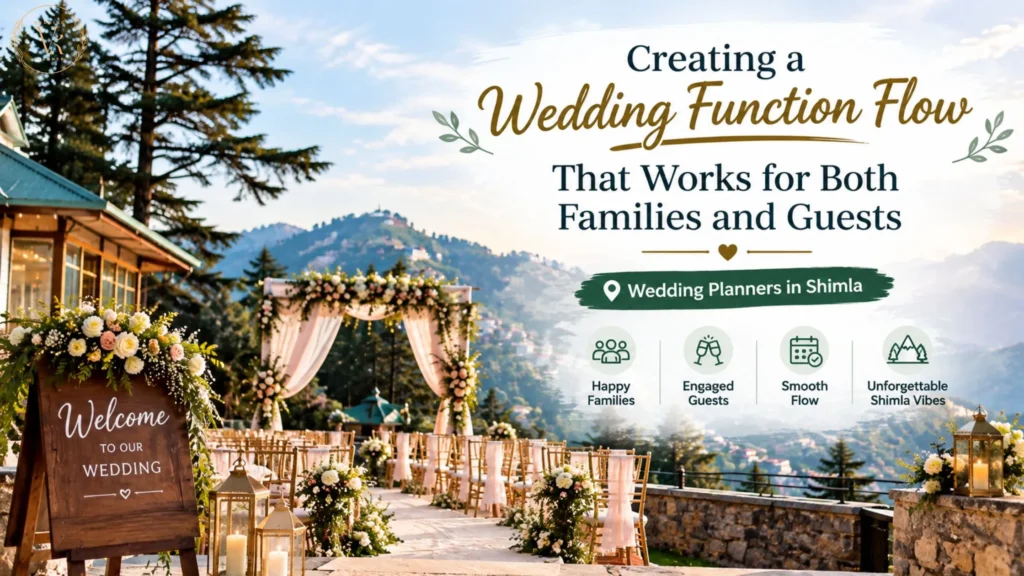
Indian weddings often bring several functions together within a short period. Mehendi, haldi, sangeet, ceremonies, family rituals and receptions may each have different requirements. The challenge is not simply deciding when every function starts. Good wedding function planning should make the entire celebration feel connected, while allowing families to enjoy their responsibilities and guests to understand what is happening next.
One Function Should Lead Naturally Into the Next
A wedding can feel tiring when every function is treated as a completely separate event. Guests may finish one ceremony and immediately be asked to move somewhere else without knowing the reason or timing.
A better wedding event flow creates a natural connection between functions. For example, a daytime family ceremony can be followed by enough time for guests to refresh before an evening celebration. This gives everyone a chance to transition instead of making the schedule feel continuous and exhausting.
Separate Family Priorities From Guest Needs
Families are usually involved in rituals, photographs, preparations and traditional responsibilities. Guests, however, may have different priorities. They need comfortable seating, food, rest and clear information about where they should be.
During family wedding coordination, both requirements should be considered separately. A ritual that requires close family members may not need every guest to remain present. Understanding this difference can make the celebration more comfortable for everyone.
Decide Which Moments Need Everyone Present
Not every wedding activity needs the complete guest list. Some rituals may be intimate, while others are designed as larger celebrations.
Couples can identify the functions where guest participation is important and communicate those timings clearly. This helps avoid situations where guests are waiting for a ceremony that has been delayed because several people are still getting ready.
Build Around the Wedding's Fixed Points
Some parts of the wedding schedule cannot easily move. The main ceremony, venue timings, meal services and transportation arrangements often have fixed requirements.
These should become the foundation of the wedding function schedule. Other activities can then be arranged around them. Instead of creating a timetable first and trying to fit important events into it later, couples can start with the elements that have the least flexibility.
Read more: Wedding Vendor Contracts: Important Things Couples Should Review Before Signing
Give Each Family a Clear Responsibility
When too many people are responsible for the same task, communication can become confusing. One family member may believe someone else is handling guest arrivals, while another person assumes the responsibility has already been completed.
A simple responsibility system can solve this problem. One person can oversee guest communication, another can coordinate family members and another can stay connected with vendors. This makes family wedding coordination much easier during busy functions.
Avoid Making Guests Chase the Schedule
Guests should not have to repeatedly ask where the next function is taking place or when they need to leave their rooms.
Simple communication can make a major difference. Welcome information, event timings, venue directions and transportation details can be shared in advance. At the venue, visible signs or a small coordination team can guide guests when movement between locations is required.
This is an important part of guest-friendly wedding planning, especially when several functions take place across different areas.
Keep Transitions Practical
The time between two functions is often underestimated. Guests may need to walk to another venue area, change clothes, freshen up, take photographs or simply take a short break.
The same applies to vendors. Decor teams may need to change setups, caterers may prepare another meal service and photographers may move their equipment.
Leaving practical transition time in the schedule can prevent one delayed function from affecting everything that follows.
Leave Room for Rituals That Run Long
Traditional ceremonies do not always follow the exact duration written on a schedule. A ritual may take longer because of family participation, religious customs or unexpected interruptions.
Instead of planning every minute tightly, couples should keep some flexibility around important ceremonies. A small buffer can protect the rest of the day’s schedule without making guests feel that everything is running late.
Read more: Local Experiences to Enjoy During a Kasauli Wedding
Let Smaller Functions Stay Flexible
Not every function needs the same level of scheduling. A formal ceremony may require precise timing, while a casual family gathering can remain more relaxed.
Treating every event with the same rigid structure can make a wedding feel unnecessarily controlled. Smaller gatherings can have broader time windows, allowing family members and guests to enjoy them without constantly checking the clock.
Test the Full Flow Before the Wedding
A schedule may look perfect on paper but create problems when the actual locations and people are considered.
Before the wedding, couples or their planning team can mentally walk through the complete sequence. Where will guests go after breakfast? Who will guide them? When will the couple change outfits? When does the next setup begin? How long will transportation take?
Going through these questions can reveal gaps before the wedding day arrives.
Planning Support for a Shimla Celebration
Hill-station weddings can involve additional coordination because different functions may use separate venues, hotels or outdoor spaces. Guest movement, weather conditions, vendor timings and family responsibilities all need to work together.
Working with experienced Shimla wedding planners can help couples bring these individual requirements into one coordinated plan. Professional support can also make it easier to manage vendors and guest movement while the families remain focused on enjoying the celebrations.
Conclusion
A successful wedding does not require every function to follow a rigid timetable. What matters is creating a sensible sequence where ceremonies, family responsibilities, guest comfort and vendor work support one another.
Thoughtful wedding function planning allows couples to enjoy each event without constantly worrying about what happens next. When transitions are considered in advance and responsibilities are clearly assigned, the entire celebration can feel more relaxed and organized.
If your wedding includes several functions and different family responsibilities, creating the right flow can make the entire experience easier to manage. VK Wedding Planner can help coordinate schedules, vendors, guest movement and event transitions so that each celebration fits smoothly into the overall wedding plan.