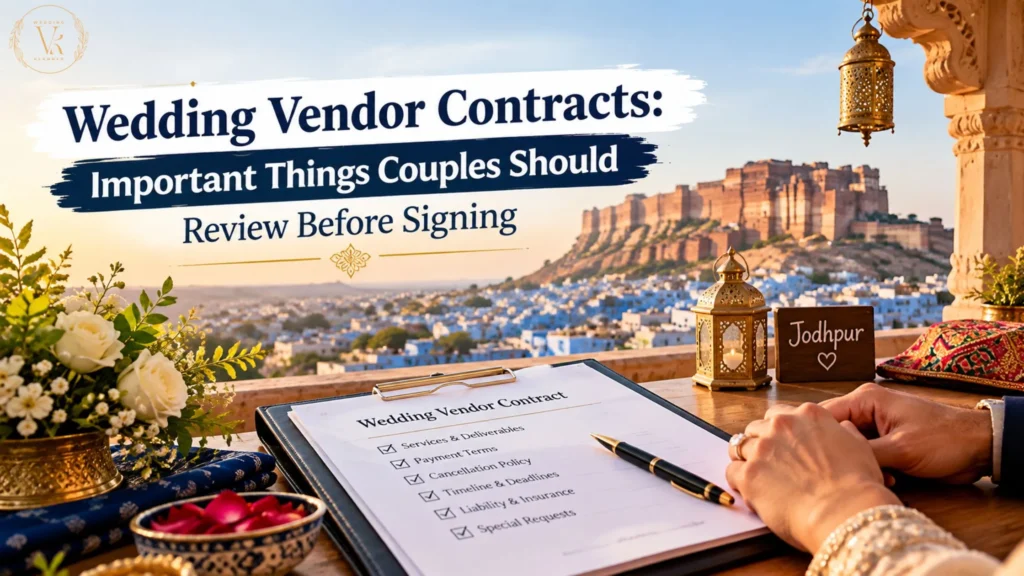
Hiring the right vendors is an important part of putting a wedding together, but selecting a photographer, caterer, decorator or entertainment team is only the beginning. Before confirming any service, couples should understand exactly what has been agreed upon. A written contract can help both sides avoid confusion about prices, deliverables, timings and responsibilities.
Reviewing wedding vendor contracts may not be the most exciting part of wedding planning, but it can prevent misunderstandings later. A few minutes spent checking the agreement carefully can make it easier to identify what is included and what may result in an additional charge.
Start With What the Vendor Is Actually Providing
The first thing to check is the scope of the service.
A vendor’s verbal explanation may sound comprehensive, but the written agreement should clearly mention what has been included in the package.
For a photographer, this could involve the number of hours, photographers, albums or edited photographs. A caterer may specify the menu, number of guests and service duration.
The more specific the agreement is, the easier it becomes to compare the promised service with what is eventually delivered.
Check Every Amount Mentioned
Wedding packages can contain several different costs.
The contract should clearly show the total agreed amount and identify whether taxes, transportation, overtime or other charges are included.
Couples should avoid assuming that an expense is included simply because it was discussed during a meeting.
If an item is important to the wedding, it is better to have it mentioned in writing.
Understand How Payments Will Be Made
The vendor payment schedule should be clear before the booking is confirmed.
An agreement may require an advance at the time of booking, another payment before the event and the remaining amount after the service is completed.
Couples should record these deadlines in their overall wedding planning calendar.
Keeping payment dates organized can prevent last-minute financial pressure and help families understand when money needs to be arranged.
Cancellation Terms Deserve Careful Attention
Wedding plans can change for many reasons.
A venue may become unavailable, the wedding date may change or the couple may decide not to continue with a particular vendor.
The wedding vendor agreement should explain what happens if either side cancels. It may include information about advance payments, refunds, notice periods or cancellation charges.
Couples should read these terms carefully rather than assuming that every advance payment is refundable.
Read more: Why Guest List Planning Matters Before Choosing a Wedding Destination
Ask What Happens If the Vendor Cannot Attend
An unexpected vendor problem can create serious difficulties close to the wedding.
The agreement should ideally clarify what happens if the vendor becomes unavailable because of illness, an emergency or another reason.
Some companies may provide a replacement professional, while others may have different policies.
Knowing the procedure beforehand gives couples greater clarity if an unexpected situation occurs.
Look Closely at Delivery Timelines
Not every wedding service ends when the function finishes.
Photography, video production, album creation and some customized services may be completed weeks or months after the wedding.
The agreement should explain expected delivery timelines wherever applicable.
This is especially useful when couples have specific deadlines for receiving photographs, videos or other final deliverables.
Verbal Promises Should Not Stay Verbal
During vendor meetings, couples may discuss additional services or special requests.
If the vendor agrees to provide something that affects the final service, it should be added to the written agreement.
This could include an additional photographer, extended event hours, special menu requirements or customized items.
A written record reduces the chance of different people remembering the conversation differently.
Know Who Is Responsible for What
Some wedding arrangements involve several vendors working together.
For example, the venue may handle electricity while an entertainment company provides equipment. A caterer may need access to a kitchen area managed by the venue.
The contract should make responsibilities clear wherever possible.
This helps avoid situations where two parties assume the other person is handling an important requirement.
Pay Attention to Overtime Conditions
Wedding functions do not always finish exactly on schedule.
If a photographer, makeup artist, transportation provider or entertainment team charges extra for additional hours, those conditions should be clearly mentioned.
Understanding the wedding vendor terms beforehand allows couples to make informed decisions if the event runs late.
It also helps the planning team create realistic schedules.
Keep Copies of All Agreements
Once a contract has been signed, couples should keep an accessible copy.
Digital folders can be useful for storing contracts, invoices and payment confirmations together.
For larger weddings, families can organize files according to vendor categories so information can be found quickly when required.
This simple habit can make communication much easier during the final weeks of preparation.
Read more: Wedding Hospitality Planning: Small Details That Shape the Guest Experience
Review Changes Before Agreeing to Them
Wedding plans often develop after the original booking.
A couple may add services, change the guest count or modify event timings. Whenever these changes affect the price or scope of work, they should be documented.
Updated invoices or written confirmations can provide a clear record of what has changed.
This is especially important when several family members are involved in vendor discussions.
Professional Planning Can Improve Vendor Coordination
Couples managing several vendors may find it difficult to monitor contracts, deadlines and responsibilities at the same time.
Professional planners can help organize vendor information and coordinate different teams according to the overall event requirements.
For couples arranging celebrations in Rajasthan, experienced Jodhpur wedding planners can also help keep vendor coordination aligned with the wedding schedule and practical requirements.
Conclusion
Carefully reviewing wedding vendor contracts can protect couples from confusion about services, costs, deadlines and responsibilities. The contract should clearly reflect what was promised, how payments will be handled and what happens if plans change.
Rather than treating paperwork as a formality, couples can use it as a planning tool. A clear agreement creates better expectations between the couple and the vendor and makes the overall coordination process more organized.
Your wedding involves many moving parts, and keeping vendor commitments organized can make the preparation considerably easier. VK Wedding Planner can assist with vendor coordination, scheduling and event management while keeping the practical details aligned with your wedding plans.