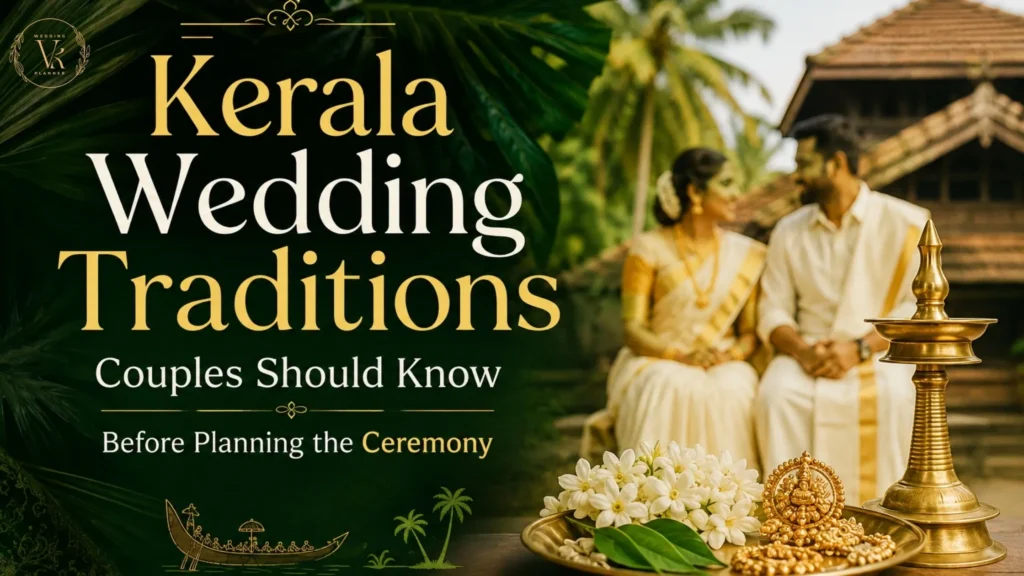
Kerala has a distinctive wedding culture where simplicity, family customs and traditional ceremonies come together. Couples who are unfamiliar with the region may recognize the beautiful attire and traditional jewellery, but there is much more behind a Kerala wedding tradition than its visual elements.
The rituals followed during a Kerala wedding can differ depending on the community and family. Understanding these differences before finalizing the ceremony helps couples decide which customs they want to preserve and how they want to present them to their guests.
A Kerala Wedding Does Not Follow One Fixed Format
There is no single ceremony that represents every Kerala wedding.
Hindu, Christian and Muslim communities in Kerala have their own customs, and practices can also vary between families. Even within Hindu weddings, the order and style of rituals may differ.
This is an important starting point for couples planning their celebration. Rather than copying a wedding format found online, it is better to first understand the traditions followed by the family.
What the Bride and Groom Traditionally Wear
The clothing immediately gives a Kerala celebration its recognizable character.
For many traditional Hindu ceremonies, the bride may wear a Kerala-style saree, while the groom may wear a traditional mundu with an appropriate upper garment. Gold jewellery can also have cultural and family significance.
The simplicity of the clothing is often part of the overall aesthetic. Couples who prefer contemporary fashion can also combine traditional elements with modern outfits during different functions.
The Thaali Ceremony Has Special Meaning
For many Hindu couples, the tying of the thaali is one of the key moments of the marriage ceremony.
The thaali represents the marital bond and is traditionally tied by the groom during the ceremony. Family members and guests witness this important moment as part of the marriage rituals.
The exact procedure can vary according to family and community customs, so couples should confirm the traditional practice they wish to follow before planning the ceremony.
Timing Can Be Decided Around Muhurtham
The timing of the main ceremony may hold considerable importance for families following traditional Hindu practices.
The muhurtham refers to an auspicious time selected for an important ceremony. Families may consult an astrologer or follow their customary method when deciding the wedding timing.
This can affect the entire event schedule, including guest arrival, photography and meal arrangements. Discussing the preferred timing early can therefore make the rest of the planning process easier.
Read more: Kasauli Wedding Invitations: Details That Make Guest Planning Easier
Sadya Can Add a Strong Regional Touch
Food is another way to bring Kerala’s cultural identity into the wedding.
The traditional sadya is a vegetarian feast associated with Kerala cuisine. It usually features a variety of dishes served together in a traditional manner.
Couples do not necessarily need to use a sadya for every wedding function. It can be selected for one particular meal, giving guests an opportunity to experience a well-known part of Kerala’s culinary culture.
For guests unfamiliar with the cuisine, explaining a few dishes can make the meal more enjoyable.
Traditional Music Changes the Feel of the Ceremony
Music can also help establish the regional character of the celebration.
Traditional Kerala instruments and musical performances may be used during ceremonies or welcoming moments, depending on the family and community.
Couples who want a contemporary celebration can keep traditional music for the main ceremony and choose modern entertainment for other functions.
This creates a clear difference between the ceremonial and celebratory parts of the wedding.
Jewellery Can Carry Family Significance
Traditional jewellery is often an important part of the bride’s appearance.
Certain pieces may have been passed through generations or selected specifically for the wedding. Their importance can therefore be personal as well as cultural.
Rather than selecting jewellery only for its appearance, couples can discuss family pieces and traditional preferences beforehand.
Guests May Need a Little Cultural Context
Not every wedding guest will understand the meaning of each ritual.
When guests are travelling from another part of India or another country, a short explanation can make the ceremony more engaging. The couple can include brief notes in the wedding programme or share information before the event.
This does not need to become a formal presentation. Even a few simple explanations can help guests understand what they are witnessing.
Modern Celebrations Can Still Respect Tradition
Following tradition does not mean that every part of the wedding has to look traditional.
Couples can use modern photography, contemporary invitations, personalized entertainment and current event formats while retaining the rituals that are important to their families.
This balance allows the wedding to feel authentic without making the couple compromise on their personal preferences.
Family Discussion Should Come Before the Final Schedule
Before finalizing the ceremony timeline, couples should discuss important rituals with their families.
Questions about the order of ceremonies, auspicious timings, traditional clothing and religious customs are better resolved before vendors begin preparing the final schedule.
This is particularly useful for a Kerala destination wedding, where relatives may be travelling from different places and the event timeline needs to be communicated clearly.
Build the Celebration Around Meaningful Customs
A memorable Kerala traditional wedding does not need to include every possible ritual.
Instead, couples can identify the customs that have genuine significance for their families and give those moments enough time and attention.
The rest of the celebration can then be designed around the couple’s personality, guest preferences and overall wedding vision.
Conclusion
Understanding Kerala wedding traditions before planning the ceremony allows couples to make informed choices rather than simply following a standard format. From traditional attire and thaali ceremonies to auspicious timings, regional food and family customs, each element can contribute to the cultural identity of the celebration.
The most meaningful wedding is one where tradition and personal preferences work together naturally.
Planning a Kerala wedding ceremony and want to respect traditional customs while creating a celebration that reflects your own style? Connect with VK Wedding Planner for personalized destination wedding planning and ceremony coordination.