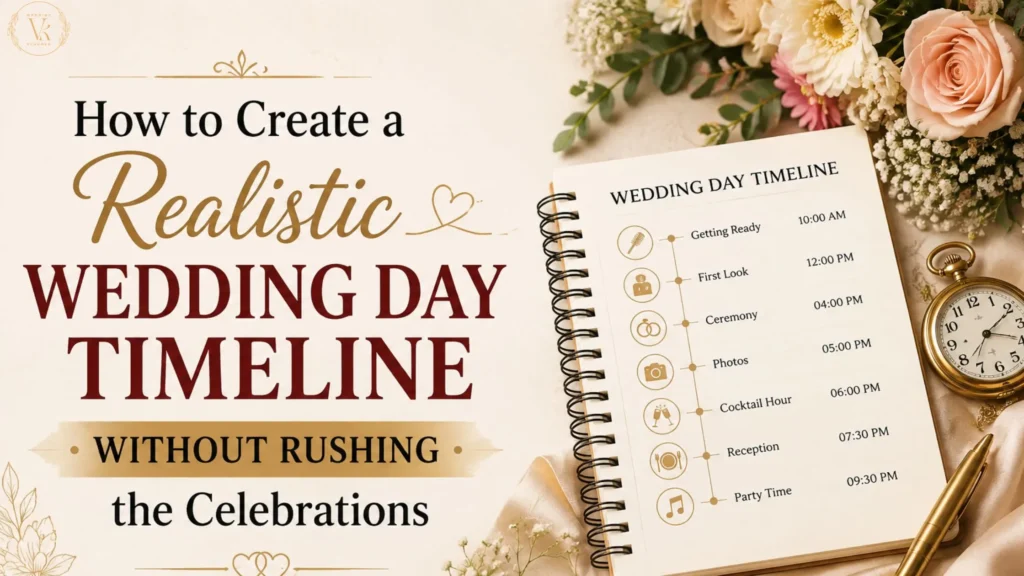
A wedding day often looks perfectly organized on paper but can feel completely different once the celebrations begin. A ceremony starts late, family photographs take longer than expected, guests arrive at different times, and one delayed function can affect everything planned after it. This is why creating a realistic wedding day timeline is an important part of event planning.
The purpose of a timeline is not to control every minute of the celebration. Instead, it should provide enough structure to keep the day moving while leaving room for natural delays, family interactions and unexpected changes.
Begin With the Events That Cannot Move
Some parts of a wedding have fixed timings. The ceremony may need to begin at a particular muhurat, the venue may have time restrictions, or vendors may have specific setup schedules.
These non-negotiable timings should form the foundation of the day.
Once they are identified, other activities can be arranged around them. Starting with flexible events and trying to fit important ceremonies later can create unnecessary scheduling problems.
Estimate the Actual Duration of Each Activity
One of the biggest mistakes in wedding schedule planning is underestimating how long activities take.
Getting ready, travelling between venues, welcoming guests and family photographs may appear simple, but each can take longer than expected.
Instead of writing a schedule based on ideal conditions, couples should think realistically. If a family photo session normally takes 30 minutes, scheduling only 10 minutes may create pressure later.
The timeline should reflect what is practically possible rather than what looks neat on paper.
Do Not Forget the Time Between Events
Travel and transition time are often missing from wedding schedules.
Guests may need time to move from one function area to another. The couple may need to change outfits, while decorators and event teams may require time to prepare the next space.
These transitions should be included in the wedding event schedule.
Even when all functions are taking place at one venue, moving a large number of guests from one area to another takes time.
Read more: Kasauli vs City Weddings: What Makes a Mountain Celebration Different?
Give the Couple Enough Breathing Space
Wedding days can become exhausting for couples.
From early morning preparations to photographs and ceremonies, the bride and groom may have very little personal time throughout the day.
A realistic timeline should include short breaks for meals, rest and preparation.
These breaks do not have to be long, but ignoring them completely can make the couple feel rushed during the most important moments of their celebration.
Plan Photography Without Interrupting Everything
Photography is an important part of a wedding, but it should not take over the entire schedule.
Couple portraits, family photographs and candid shots all require coordination. Instead of arranging every photograph at random moments, specific time blocks can be reserved.
This allows photographers to work efficiently without repeatedly pulling the couple away from guests or ceremonies.
The wedding ceremony timeline should also allow photographers enough time to capture important rituals without delaying the event.
Build Extra Time Into Important Moments
A schedule with no flexibility can quickly collapse after one small delay.
Adding a buffer between major events gives the planning team an opportunity to manage unexpected situations without changing the entire day.
For example, if dinner is planned immediately after a ceremony, a short buffer can help accommodate a delayed ritual or extended family photographs.
These extra minutes may seem unnecessary during planning but can be extremely useful on the actual wedding day.
Consider the Guest Experience
The wedding timeline should not focus only on the couple and vendors.
Guests also need to know when important functions are happening and how much time they have between events.
If there is a long break, families may need information about what they can do during that period. If two functions are scheduled close together, guests should have enough time to change and prepare.
edding function timings can make the celebration more enjoyable for everyone.
Keep the Schedule Simple for Guests
The internal planning schedule can be detailed, but the guest version should remain simple.
Guests usually do not need to know vendor setup times or photography arrangements. They only need clear information about when and where they should attend each function.
A separate detailed schedule can be prepared for the wedding team, family coordinators and vendors.
This avoids overwhelming guests with unnecessary information.
Read more: Local Experiences to Enjoy During a Kasauli Wedding
Discuss the Timeline With Every Important Vendor
A timeline is only useful when the people involved know about it.
Photographers, caterers, decorators, makeup artists and transportation teams may all work according to different schedules. Sharing relevant timings with them in advance helps avoid confusion.
For larger celebrations, professional coordination can ensure that everyone understands their responsibilities without requiring the couple to manage each vendor personally.
Experienced Chandigarh wedding planners can help create a practical flow that considers ceremonies, guest movement and vendor coordination together.
Review the Timeline Before Finalizing It
The first version of a schedule should not automatically become the final version.
Couples should review it with their families and planning team. Questions such as these can help identify problems:
- Is enough time available between functions?
- Are guests expected to move too quickly?
- Does the couple have time to eat and rest?
- Are vendor setup requirements included?
- Is there flexibility for delays?
A final review can prevent unrealistic expectations on the wedding day.
Conclusion
A well-prepared wedding day timeline should make the celebration feel easier, not more controlled. The best schedules balance structure with flexibility and give important moments the time they deserve.
By considering actual event durations, transition periods, guest comfort and possible delays, couples can create a wedding schedule that supports the celebration rather than rushing it.
A thoughtful timeline allows everyone to focus more on the wedding itself and less on constantly checking what needs to happen next.
A smooth wedding day often depends on careful coordination behind the scenes. VK Wedding Planner can help organize function timings, vendor schedules and event flow so that your celebrations move naturally from one moment to the next.